
Sealed (Fully Enclosed) Gas Relay
A Buchholz gas relay built with a fully enclosed housing and terminal compartment. Specified when the standard vented construction is not acceptable to the transformer designer or the end client — confirm the required variant against your own relay schedule before ordering.
- QJM-40
- QJ2-40
- QJ3-40
Further sealed-frame sizes and the full installation dimension chart are being confirmed with our manufacturing partner. Send us your pipe diameter and flange pattern and we will tell you which sealed frames can be offered.
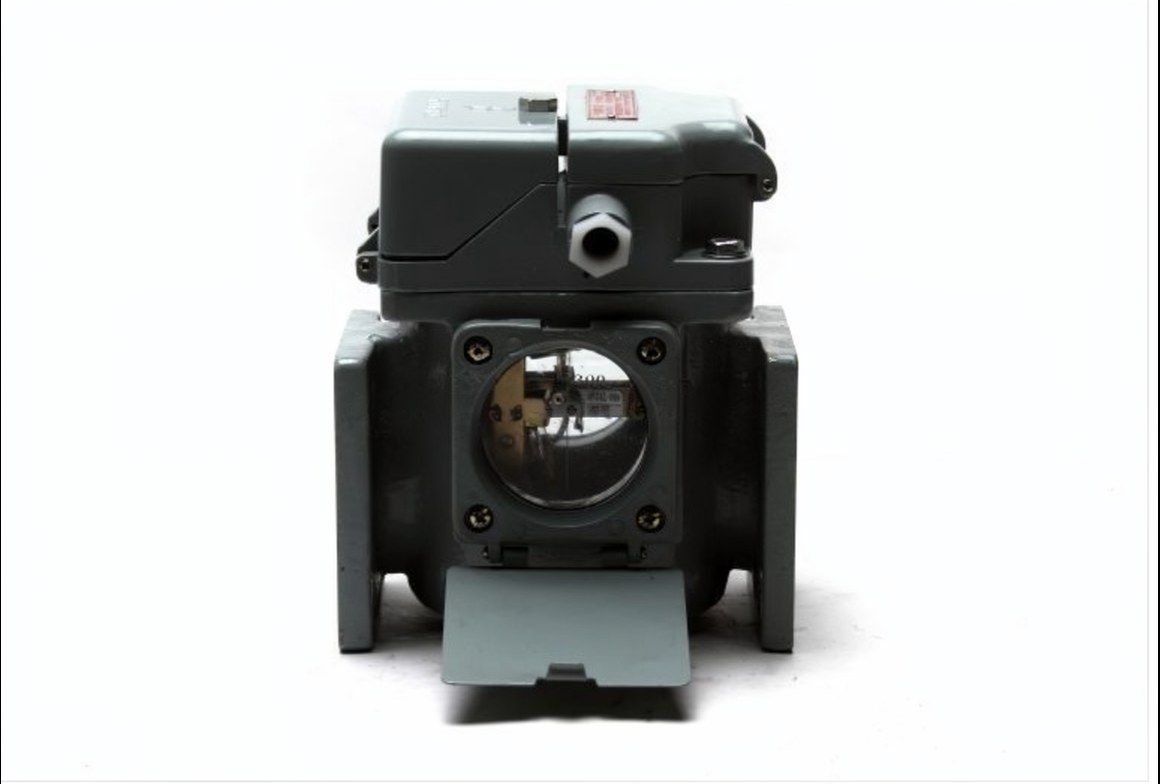
Photo shows a unit from the same QJ family. Dedicated photos of the sealed frame are provided with the quotation once the model is matched to your pipe size.
What "Sealed" Actually Changes
The protection principle is identical to a standard Buchholz relay. The difference is in the enclosure, not in the function.
Same fault logic
Gas accumulation from incipient internal faults lifts the upper float and closes the alarm contact; an oil surge from a severe fault deflects the lower baffle and trips the breaker. Both stages behave exactly as on a vented unit.
Enclosed terminal compartment
In a fully enclosed build, the contact compartment, cover joint and cable entry are designed as a tighter assembly than on the standard vented housing, so the contacts are not exposed to the same breathing path.
Still serviceable
A test / gas sampling point is retained so the relay can be bled and gas can be drawn for analysis after an alarm. The sampling method is identical to a standard relay.
Construction descriptions above are general engineering differences between vented and fully-enclosed builds. The actual sealing arrangement, cable gland thread, gasket material and IP rating depend on the specific frame — all are confirmed against the factory datasheet before we quote.
Standard QJ vs. Sealed Type — How to Choose
Use this as a screening table. The final decision belongs to the transformer designer, not to the parts supplier.
| Question | If the answer is yes… | Usually specified |
|---|---|---|
| Does the transformer have a conventional conservator and breather? | The relay sits in the conservator pipe and breathes with the oil system | Standard QJ double-float → |
| Does the relay schedule or client specification explicitly call for a sealed / fully enclosed relay? | The vented construction will be rejected at document review, whatever the electrical performance | Sealed type (QJM / sealed QJ frame) |
| Will the terminal box be exposed to standing water, salt-laden air or heavy dust? | Ingress into the contact compartment is a known cause of false alarms and corroded contacts | Sealed type, IP rating to be stated |
| Is the transformer a sealed, conservator-less design? | There is no conservator pipe, so a classic pipe-mounted Buchholz relay does not apply — the correct protection device must be selected by the designer | Confirm with the transformer designer first |
| Are you replacing an existing sealed unit? | The frame, flange pattern and float setting must match the unit removed | Send us the nameplate photo and pipe diameter |
This table is a screening aid only. Whether a sealed relay is required on a specific design is an engineering decision for the transformer manufacturer or the owner's engineer. We do not override a relay schedule.
Fields We Need Before We Can Quote
Six questions. Answer them in one message and we can usually come back with a matched model and a price the same working day.
| # | Field | Why it decides the part |
|---|---|---|
| 1 | Pipe nominal diameter | Sets the frame size — the relay body must match the conservator pipe bore |
| 2 | Flange pattern and bolt circle | Square and round flange patterns exist; a mismatch is the single most common reason a replacement does not fit |
| 3 | Float configuration | Single-float (alarm or trip only) vs. double-float (both stages) |
| 4 | Contact arrangement | Normally-open / normally-closed, and how many contacts are wired to the marshalling box |
| 5 | Cable entry | Gland thread and cable outside diameter; must suit the sealed enclosure |
| 6 | Quantity and destination | Packing, documents and freight are quoted together, not separately |
If you do not have the flange drawing, photographs of the existing unit taken square-on from the front and side, plus a tape measure across the bolt holes, are usually enough to identify the frame.
Technical Data
Values below are the ones we can state. Everything else stays blank until the factory confirms it in writing.
| Item | Value |
|---|---|
| Designation | Sealed / fully enclosed gas relay (QJM type and sealed QJ frames) |
| Protection function | Gas accumulation alarm + oil surge trip (double-float); alarm only on single-float frames |
| Pipe nominal diameter | TBD* per model — DN 25 / 40 / 50 / 80 across the QJ family |
| Rated insulation / contact rating | TBD* |
| Alarm gas volume setting | TBD* |
| Trip oil velocity setting | TBD* |
| Ingress protection | TBD* |
| Operating temperature range | TBD* |
| Factory standard | Q/TTJ 32.07.11-2018 (manufacturing partner's standard for the QJ family) |
| Net weight / dimensions | TBD* — dimension drawing supplied as PDF on request |
TBD* = not yet confirmed in writing by the manufacturing partner; we do not publish unverified figures. Values are supplied with the quotation once matched to your model.
Handling, Packing and Documents
Practical points that matter more than the datasheet when the crate arrives.
- Packing — individual carton, foam-protected, export cartons on a fumigated pallet; crate for single-unit air freight. Packing photos are sent before dispatch.
- Shipping documents — packing list, commercial invoice and inspection record with every shipment.
- Compliance documents — test and conformity documents applicable to the models you buy are supplied as copies with the quotation and again with the shipping documents. Tell us the destination country and the standard you must satisfy at enquiry stage; we confirm what can be supplied before you commit.
- Destination-specific schemes — where a local conformity scheme applies (for example SABER for Saudi Arabia), the applicable route is confirmed by the importer with their customs broker against the HS code and the current technical regulation. We supply the documents we hold and do not act as the importer of record. See how we handle quality & compliance →
Frequently Asked
Is a sealed relay electrically interchangeable with a standard QJ relay?
Not automatically. The two-stage float logic is the same, but the frame, flange pattern, cable entry and terminal arrangement can differ. Match the unit to your pipe diameter, flange pattern and contact arrangement — we do this for you from the nameplate or photographs.
Can you match a sealed unit we are replacing?
Yes, in most cases. Send the nameplate photo, the pipe diameter and the flange bolt pattern, or the original part number, and we identify the equivalent frame before quoting.
Do you publish the IP rating and the gas-volume settings?
Not on this page — those figures are marked TBD* until the manufacturing partner confirms them in writing for the specific frame. They are supplied with your quotation and with the factory datasheet.
Can sealed and standard relays be mixed in one shipment?
Yes. Most orders we consolidate contain several accessory lines. One commercial invoice, one packing list, one booking. See how a full package is put together on our EPC and project supply page.
What is the smallest quantity you will supply?
Small trial and replacement quantities are accepted. There is no fixed minimum published here — the practical minimum depends on the frame and is confirmed with the quotation.
Replacing a sealed gas relay, or specifying one for a new build?
Send the pipe diameter, flange pattern and quantity — matched model and a priced offer back within 24 hours.
← Back to all transformer accessories · Standard QJ gas relay →